Théâtre du Loup, Geneva
(for French scroll down)
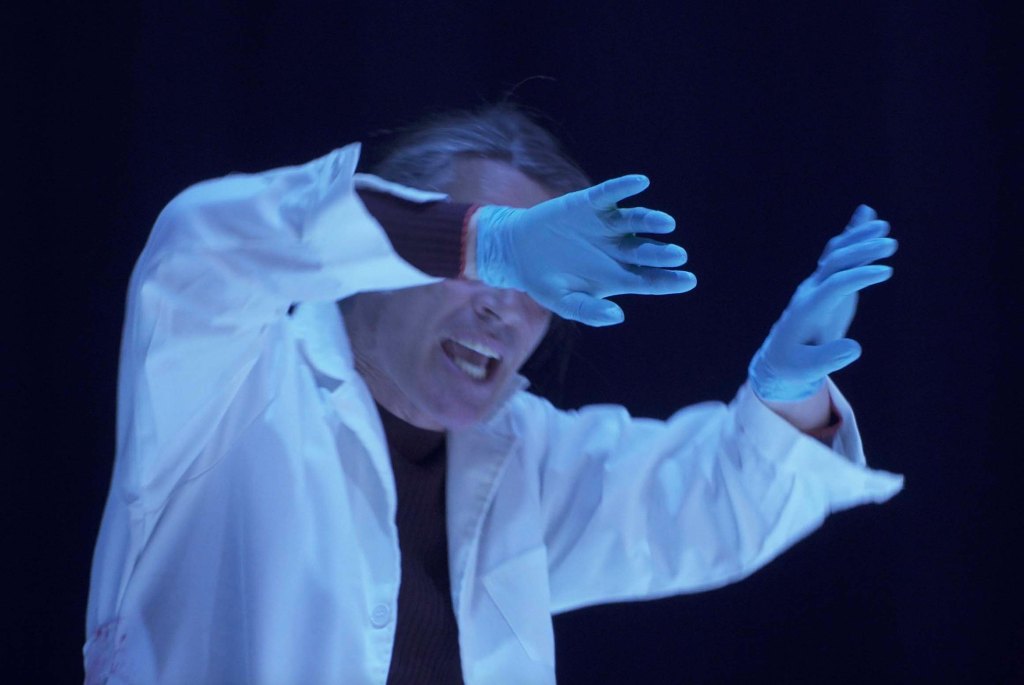
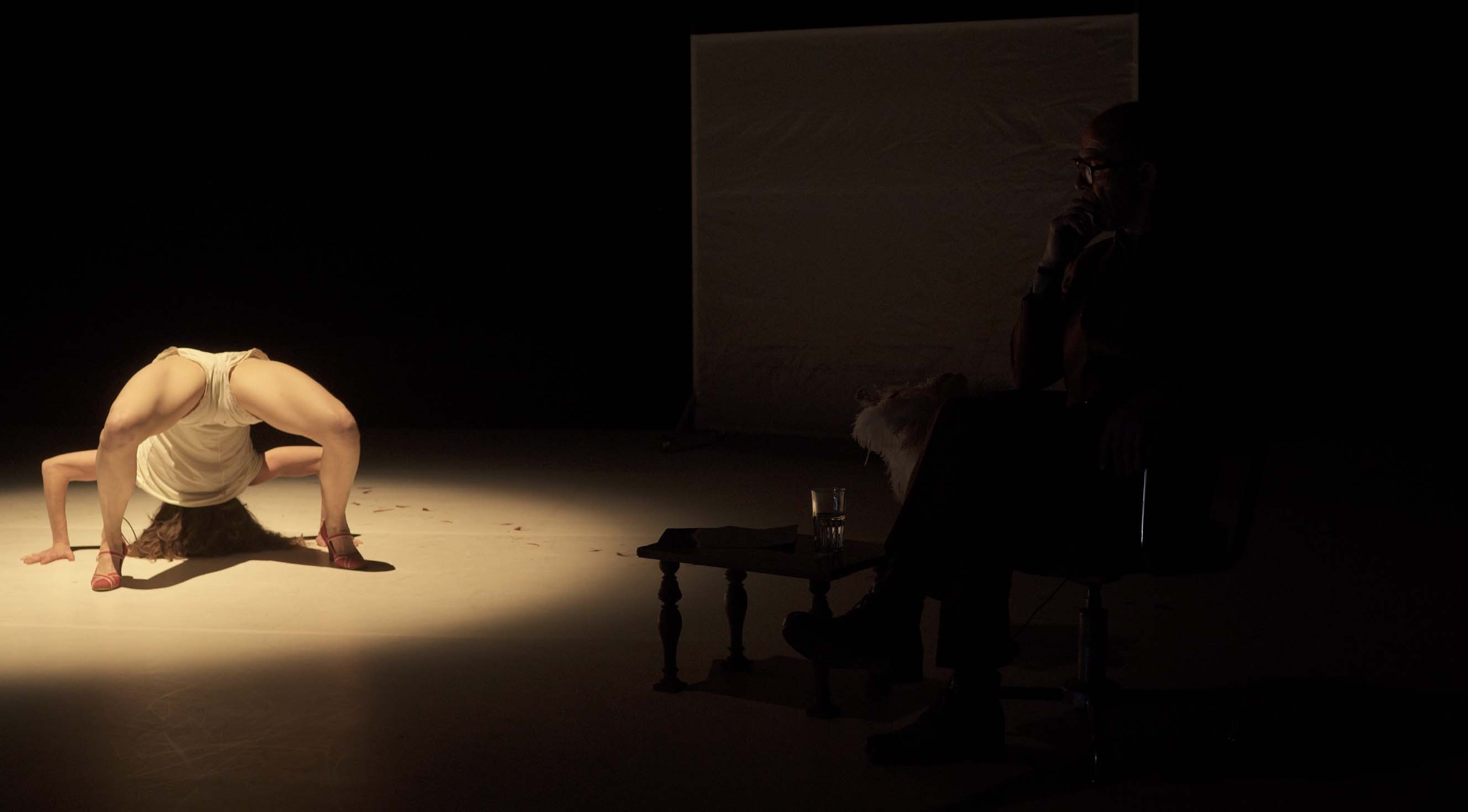
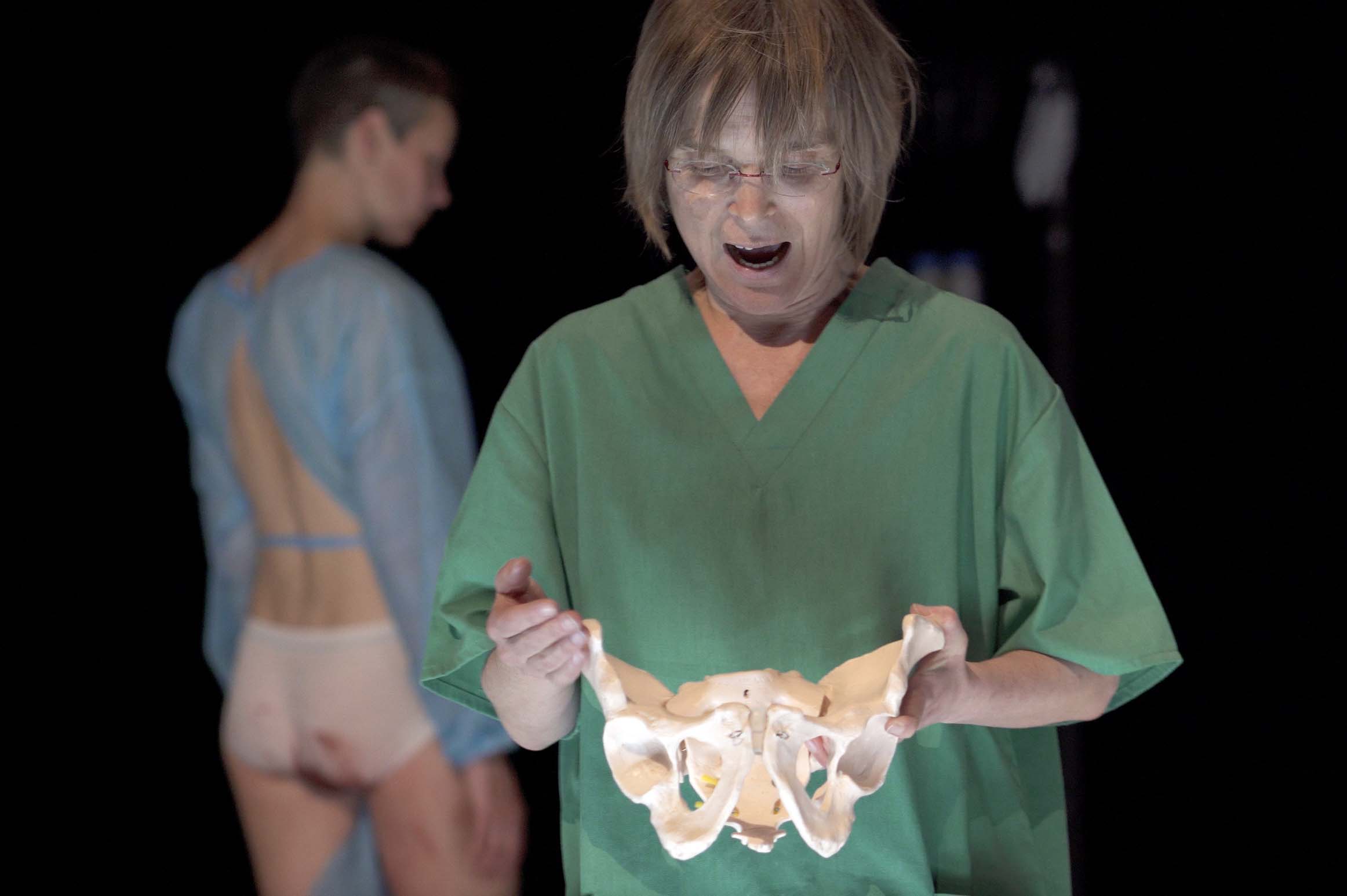
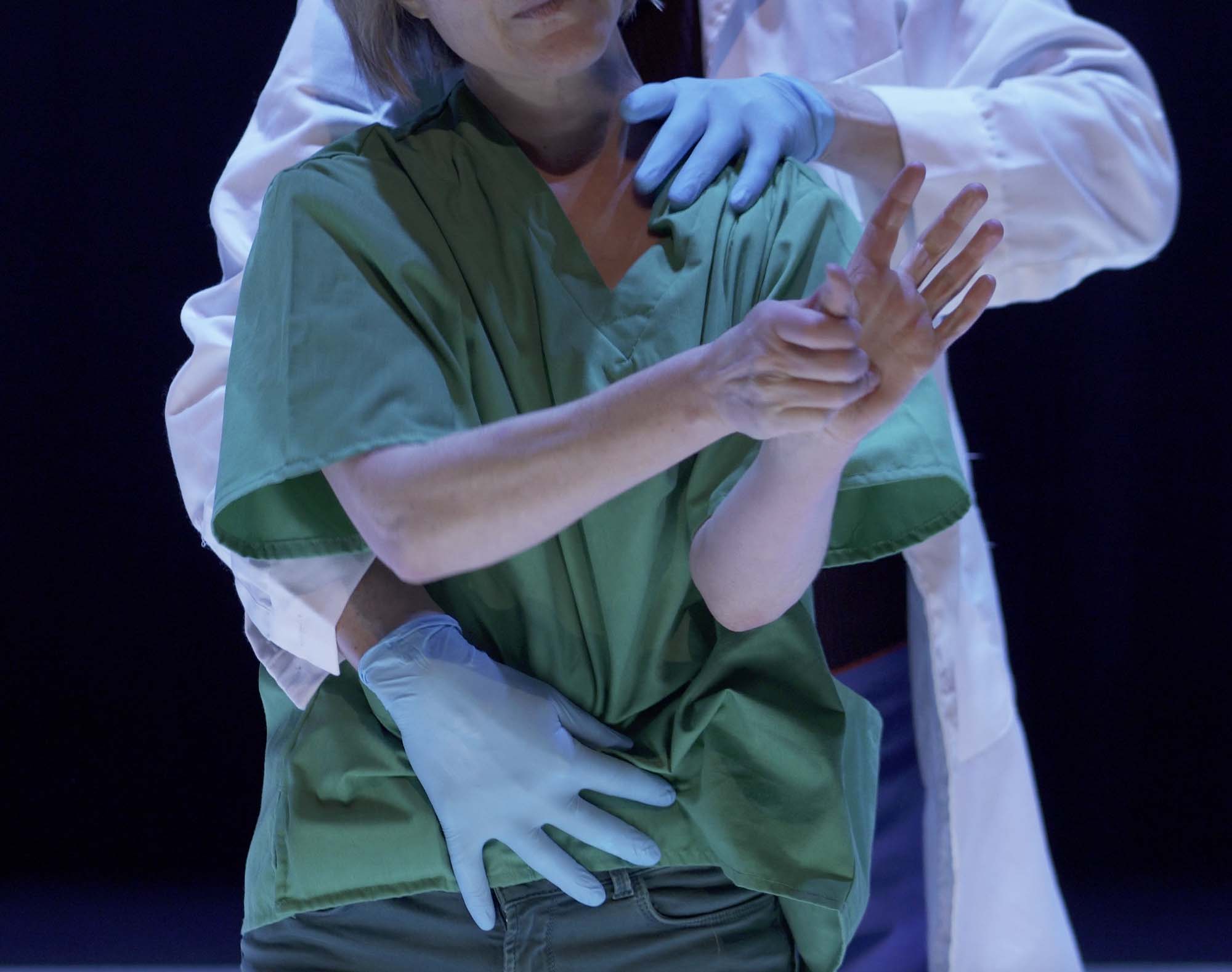
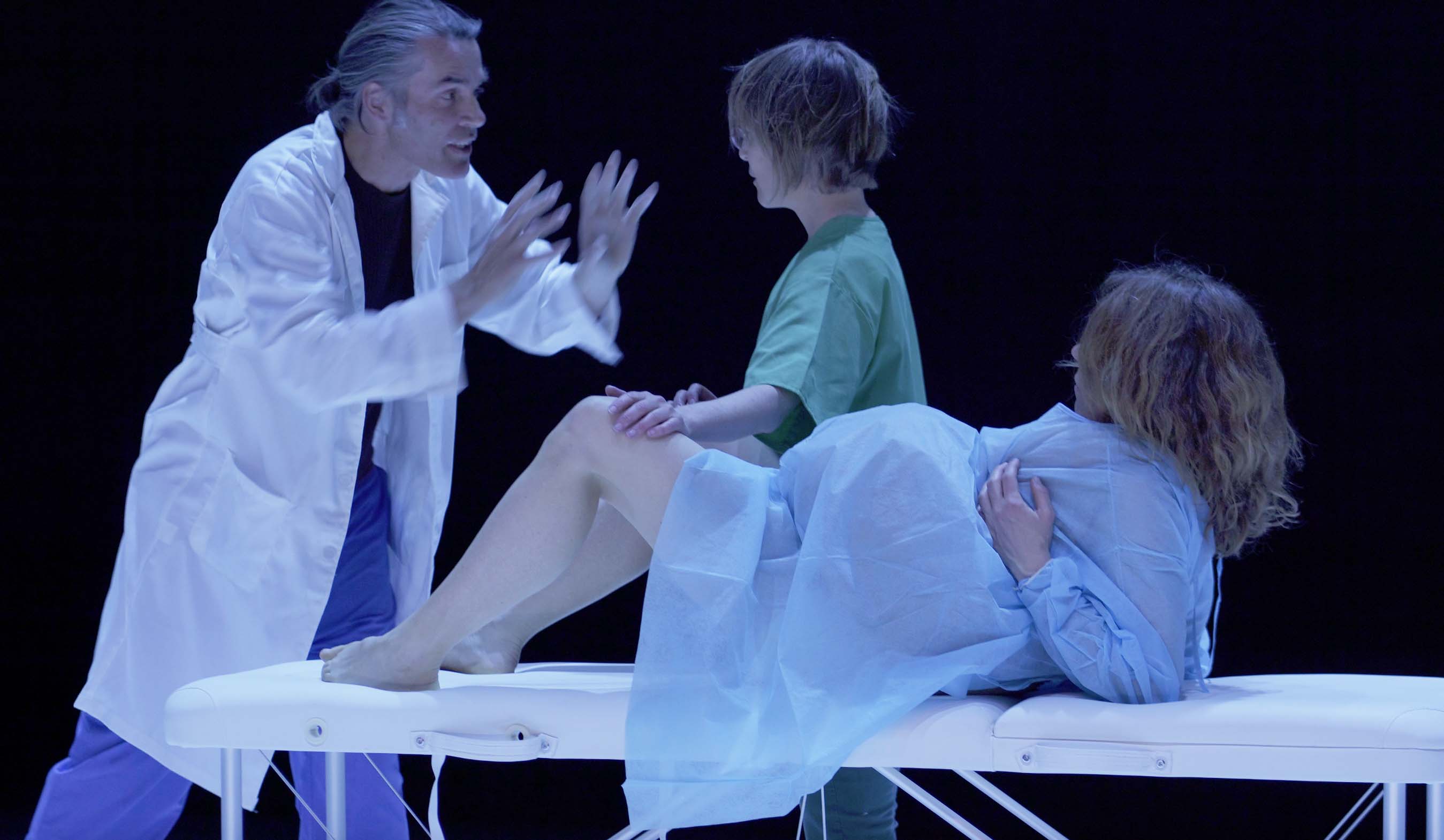
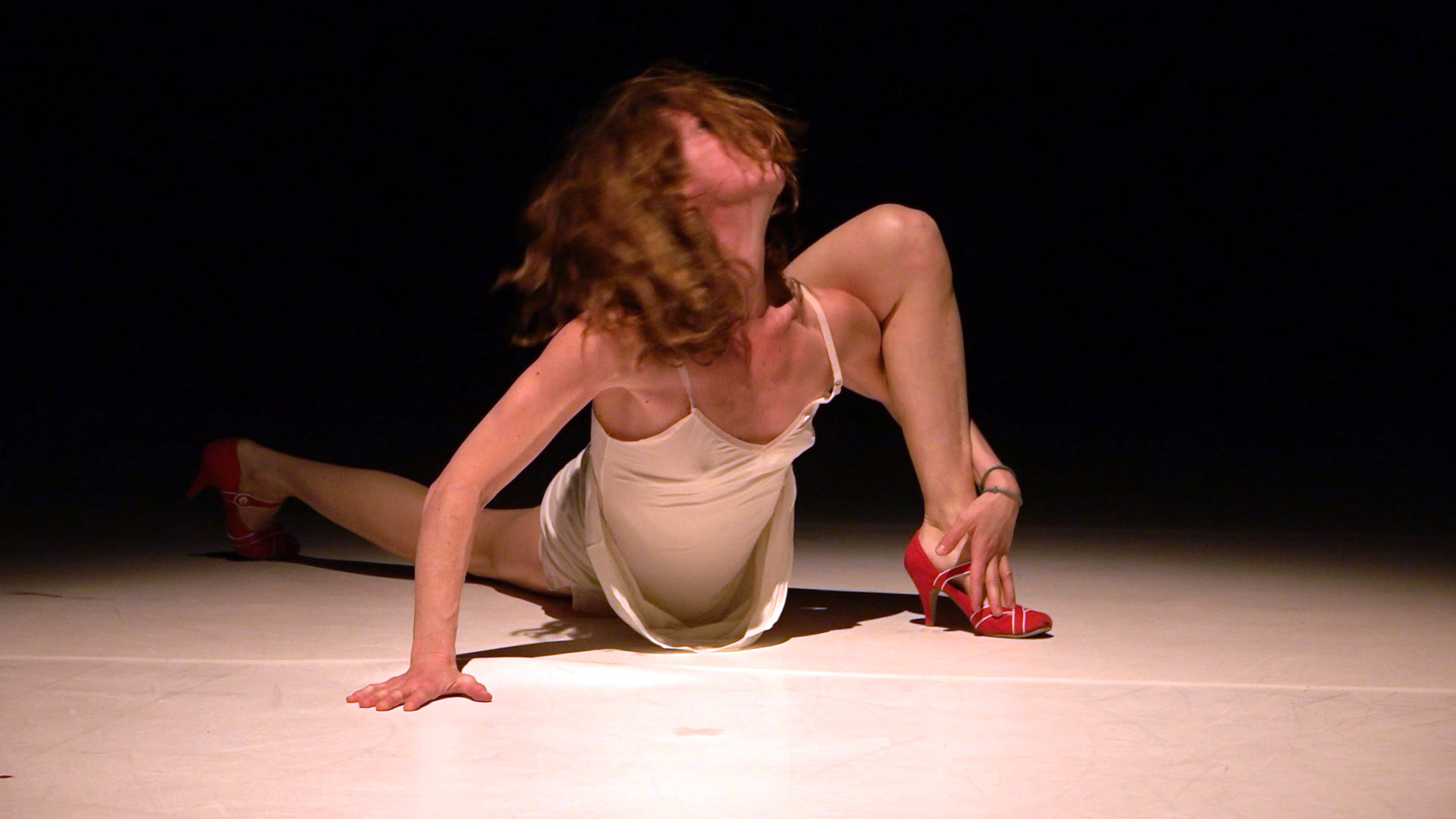
At the crossroads of psychosomatic disorders and biopolitical issues, between the “mother syndrome” and that of the doctor, emerges the figure of the Femmelade (woman + patient). Her body-object, scrutinized by neurologists, psychiatrists, and obstetricians, becomes the site of a governance to be reinvented.
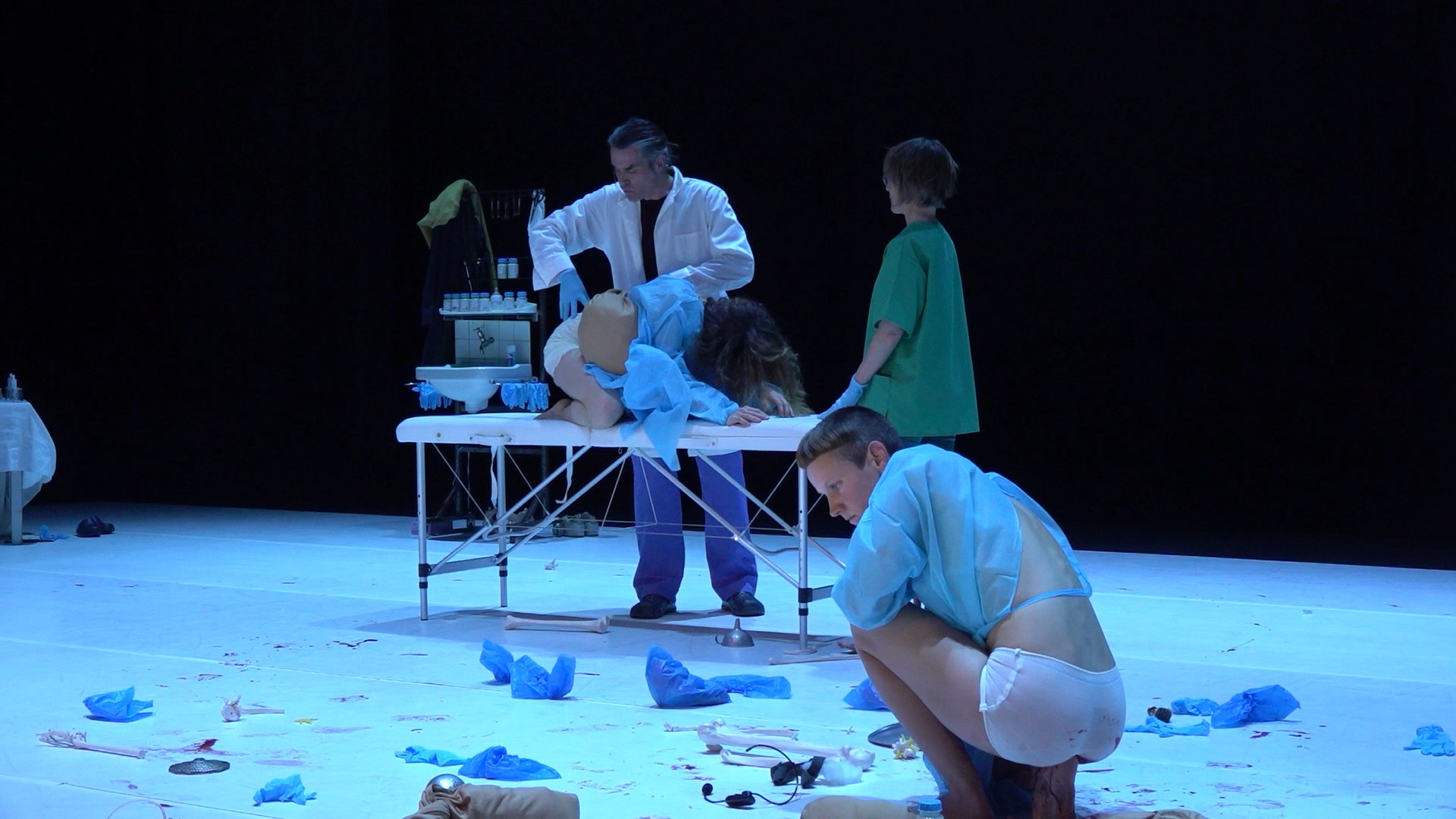
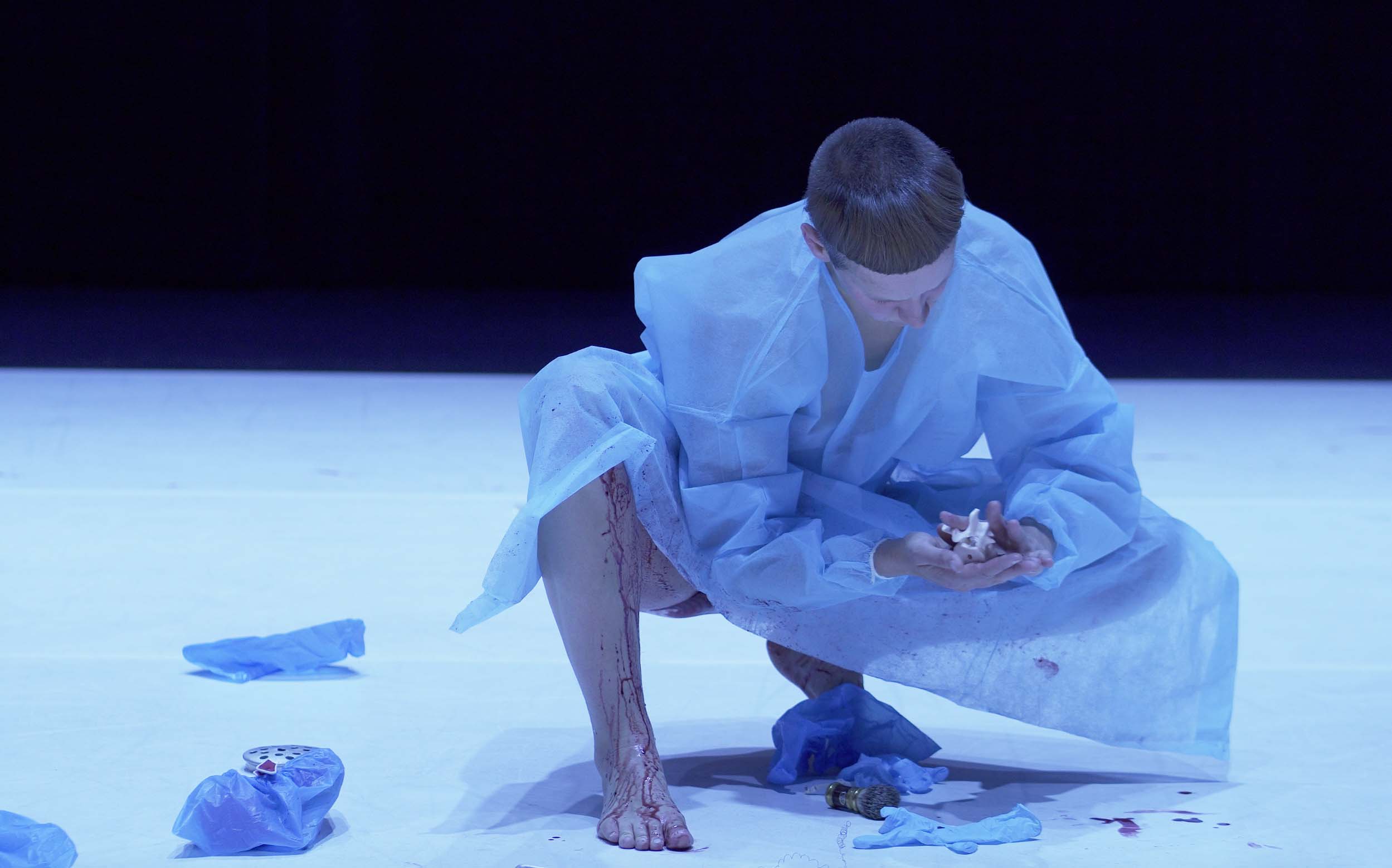
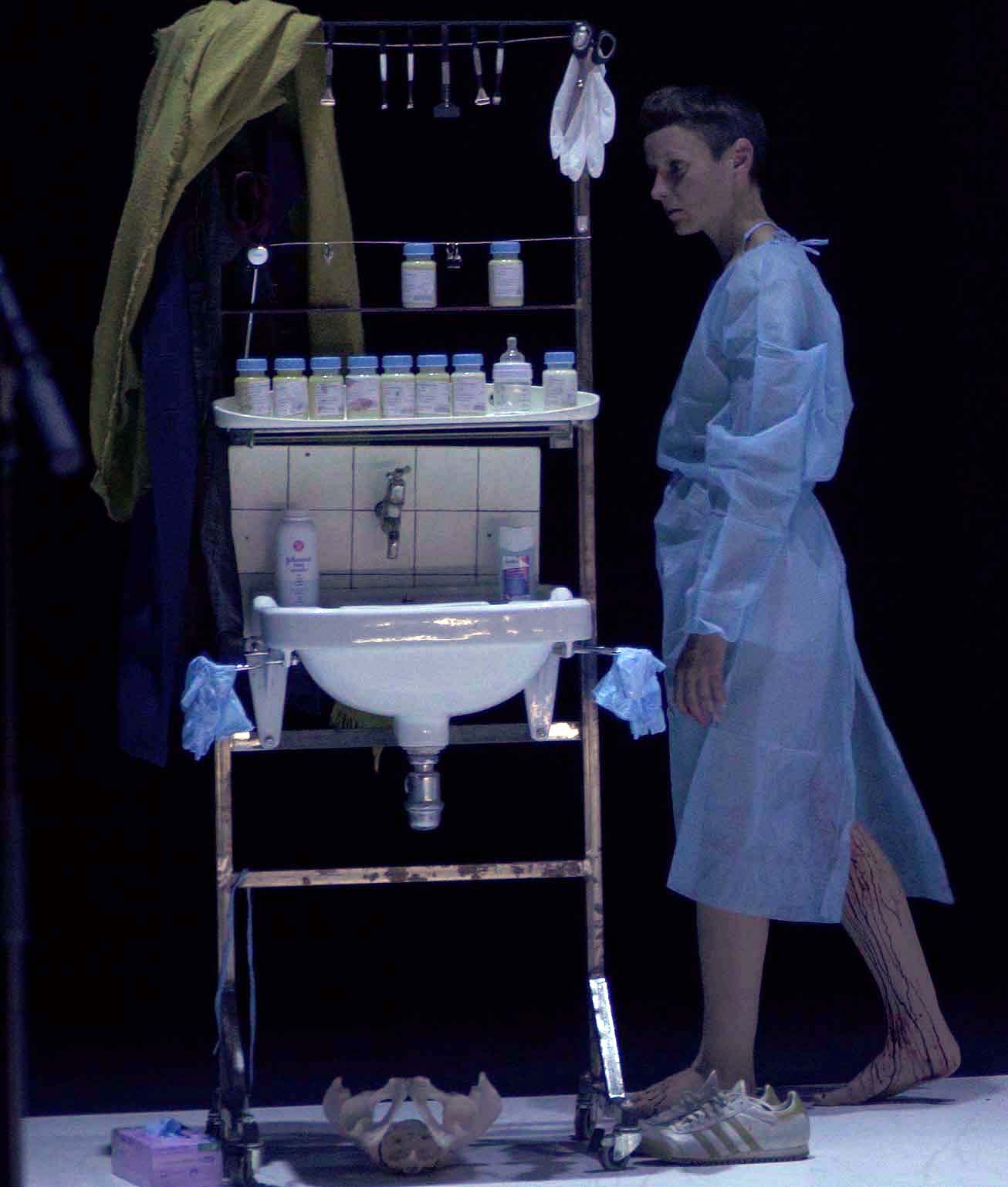
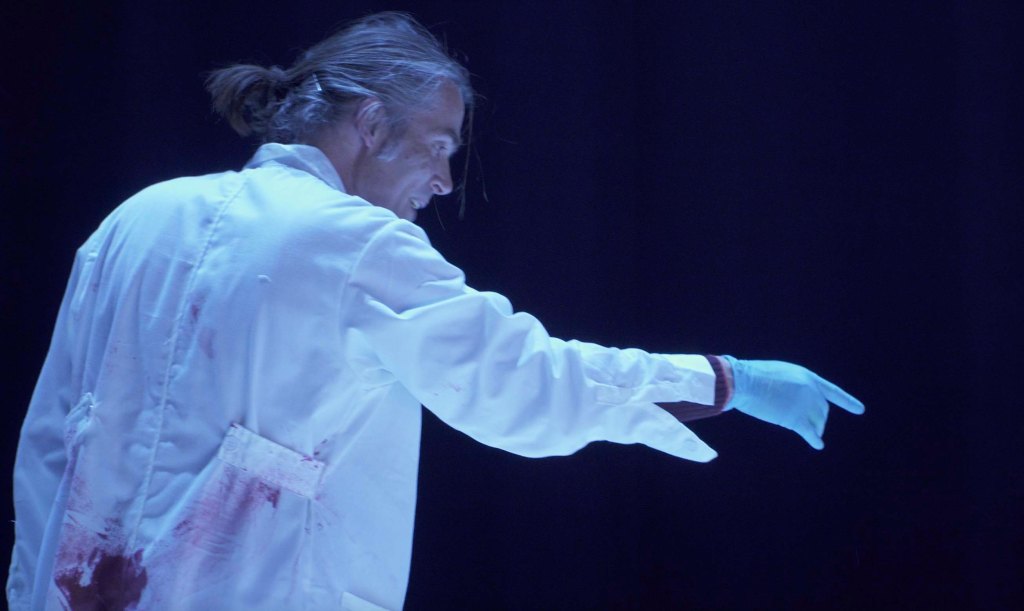
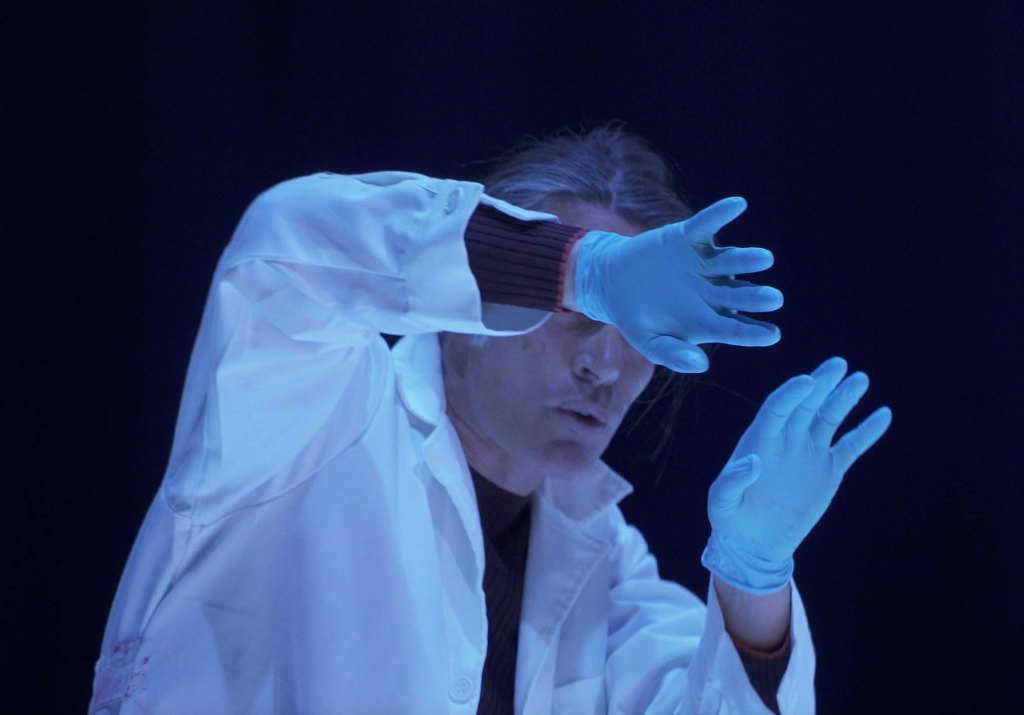
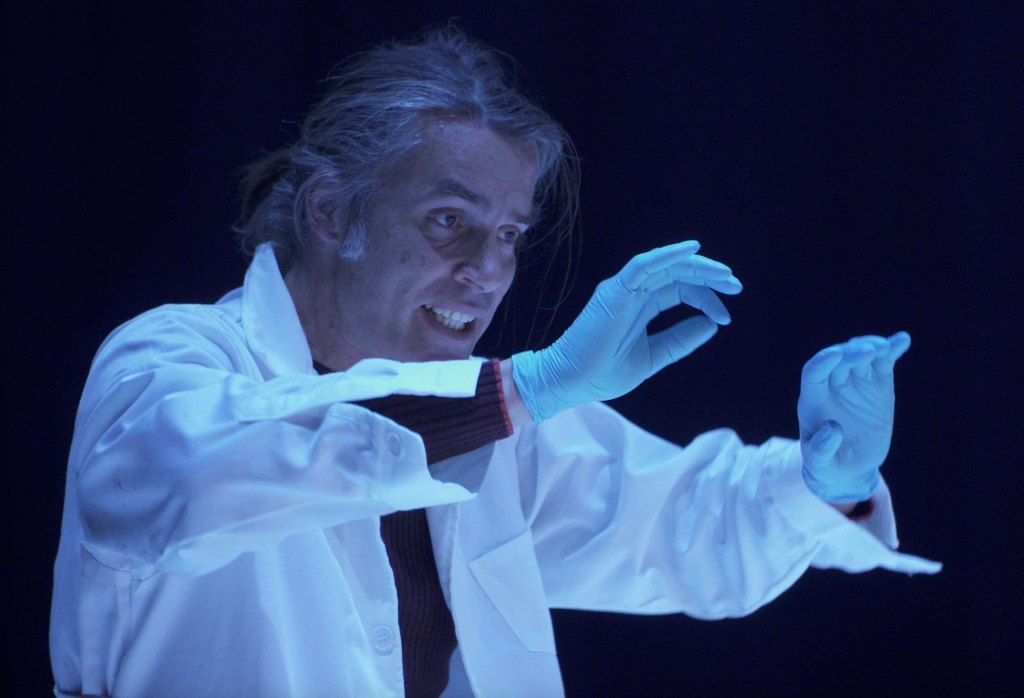
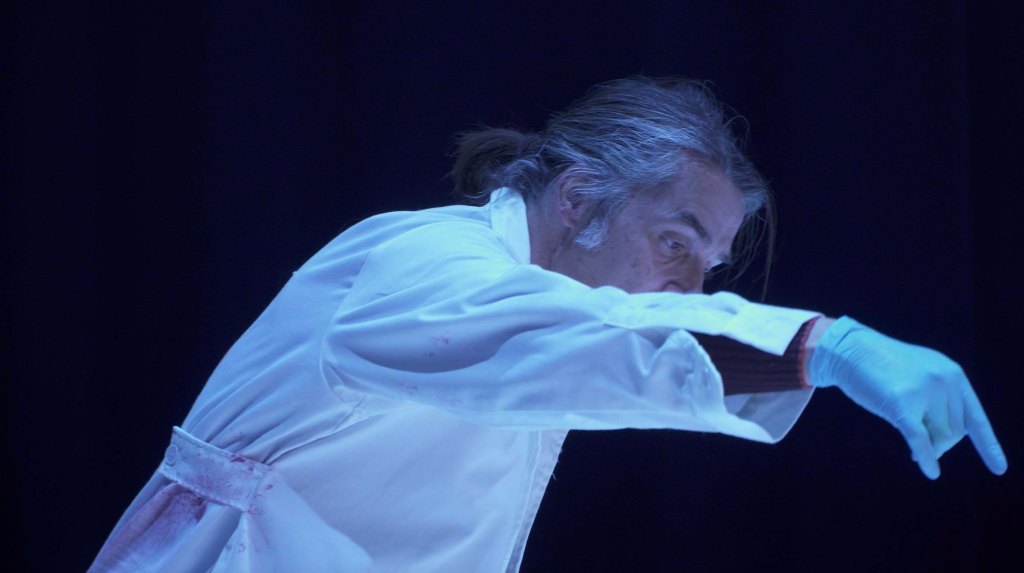
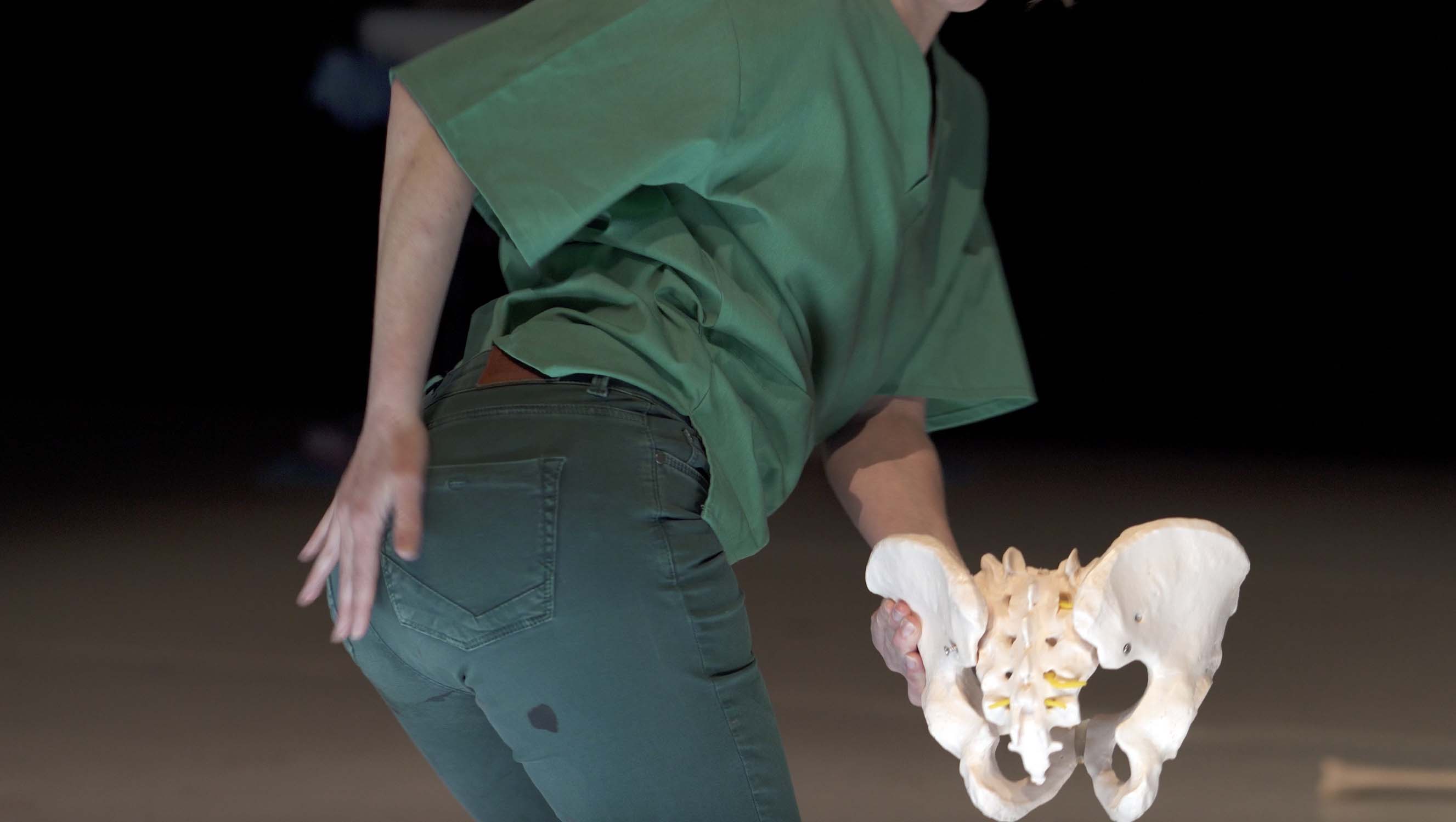
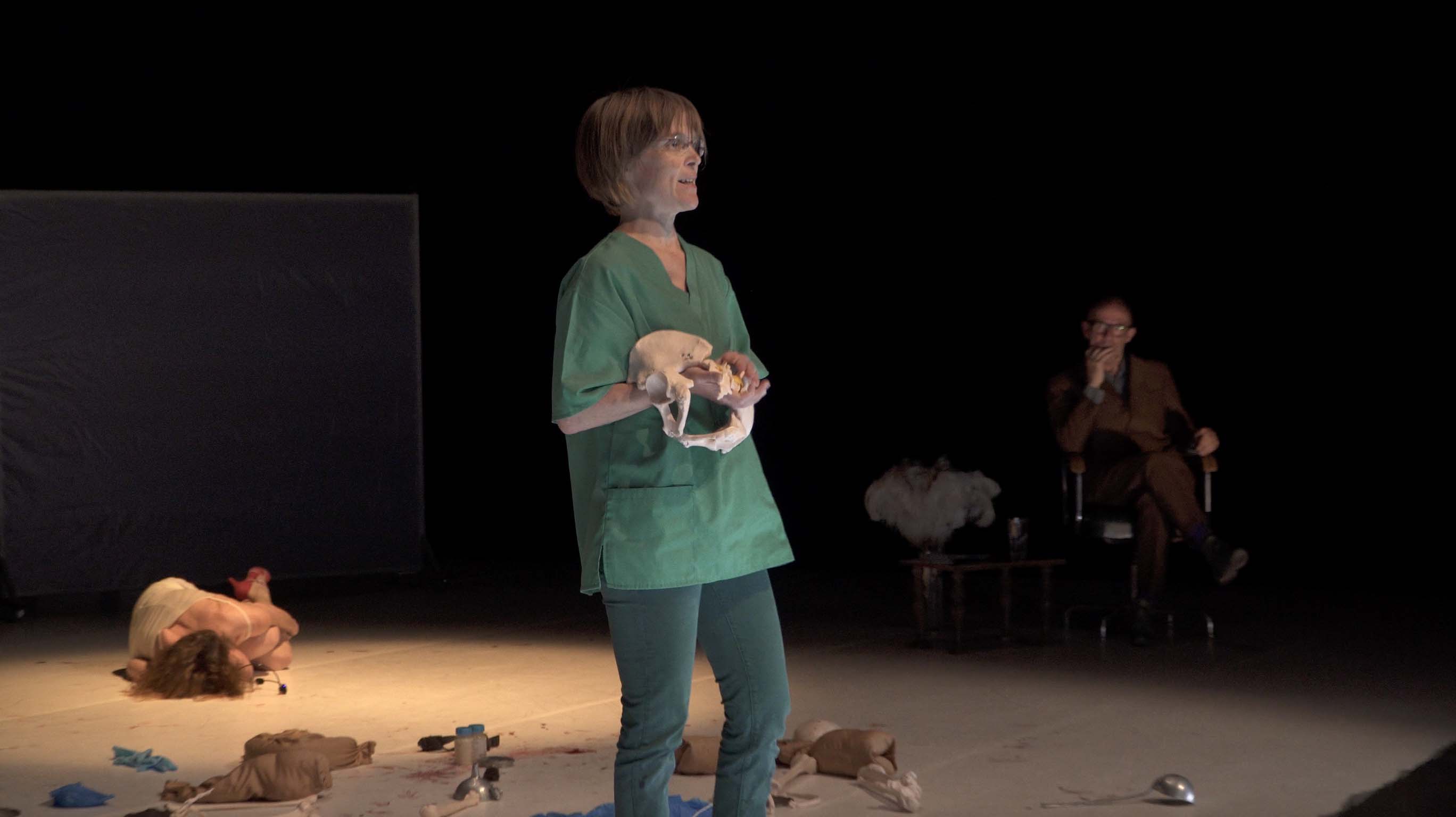
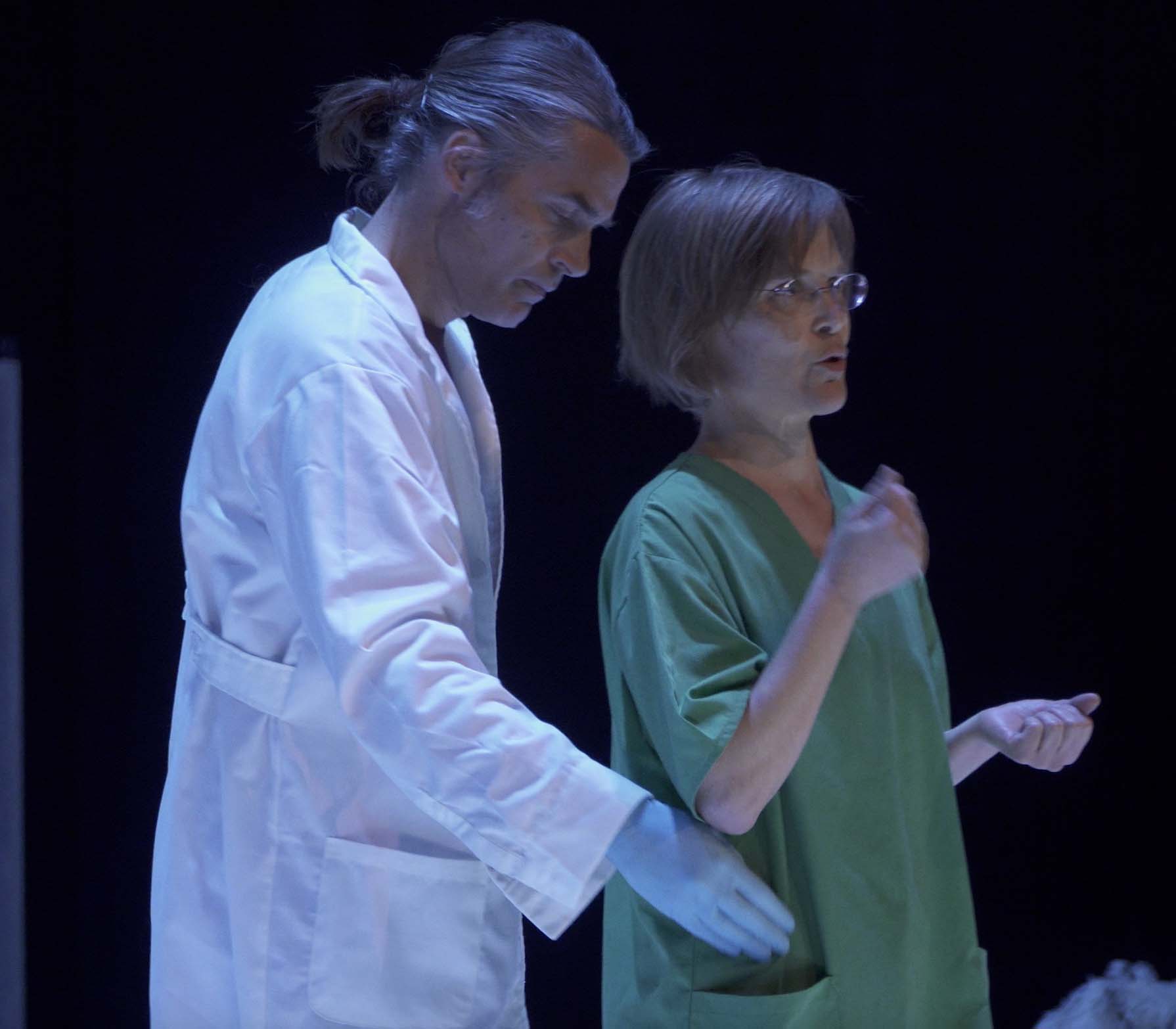
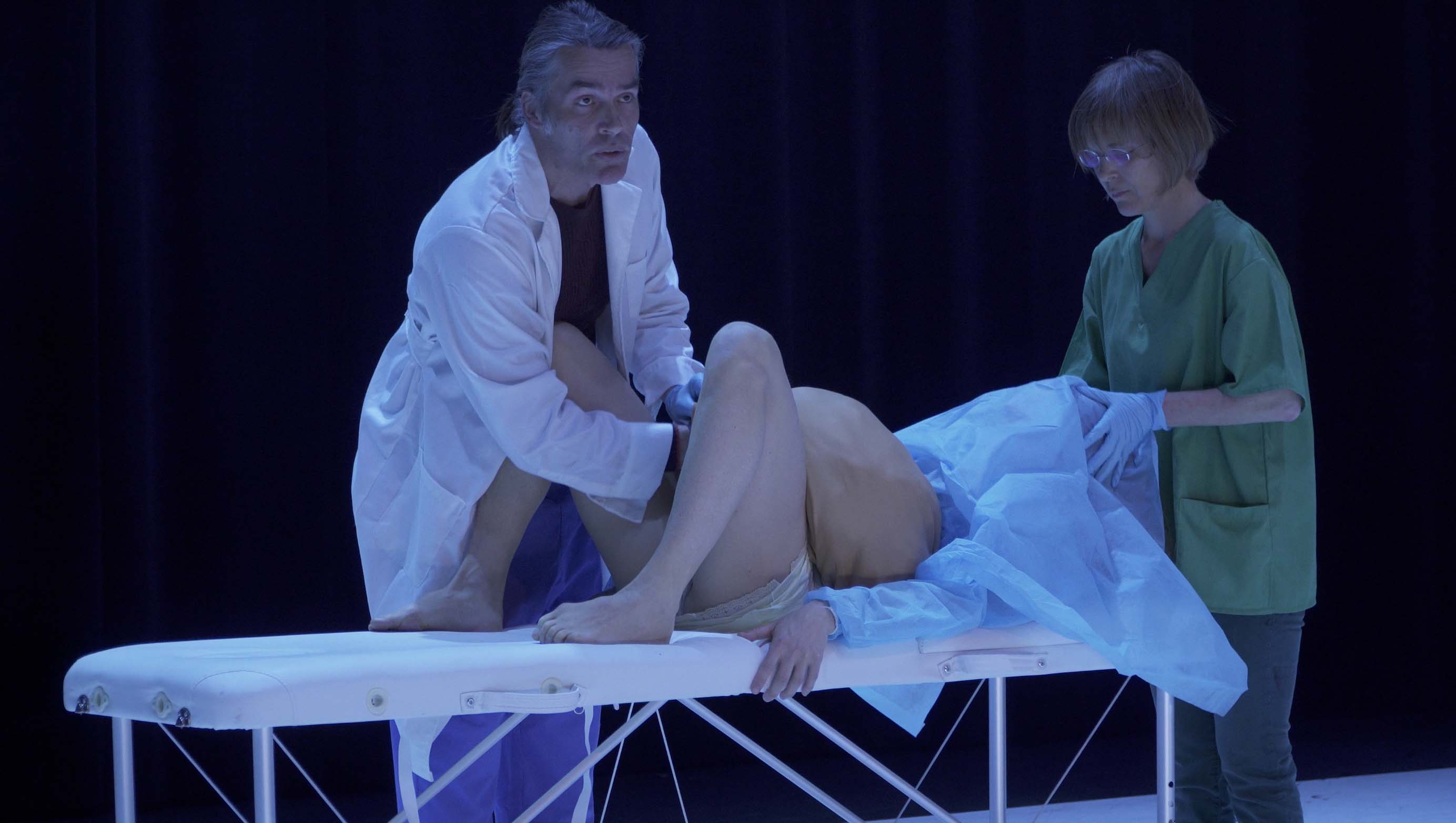
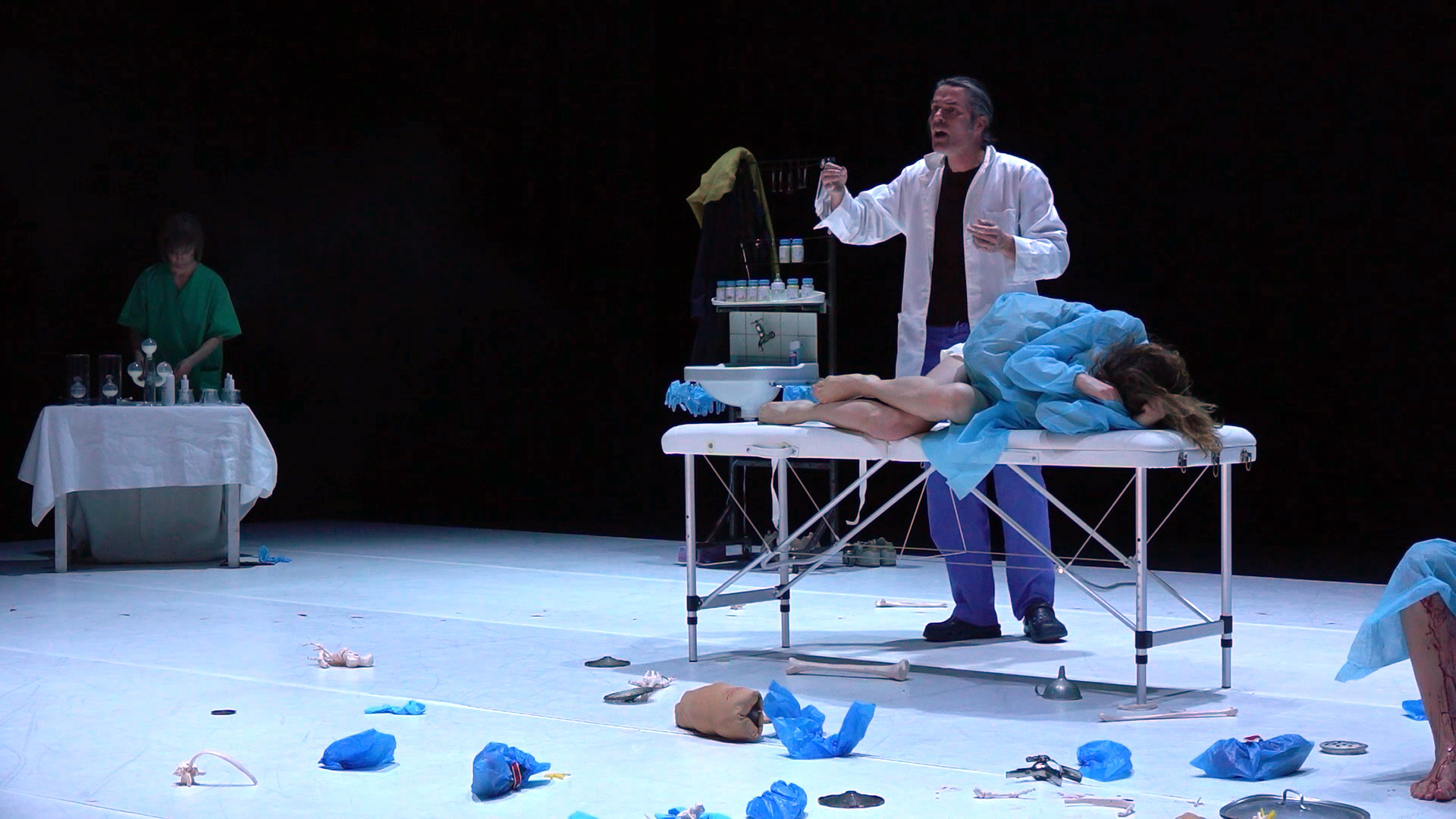
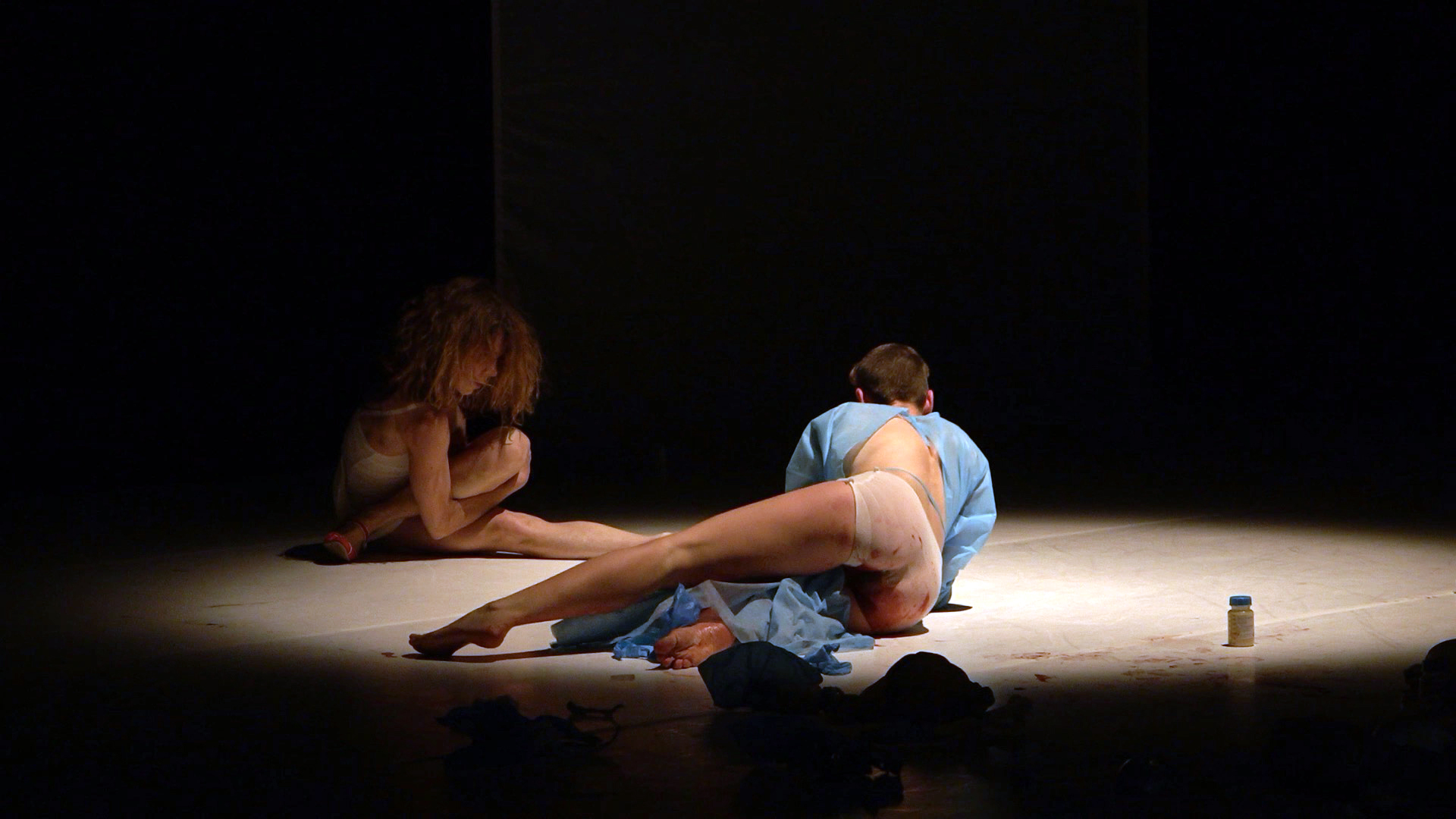
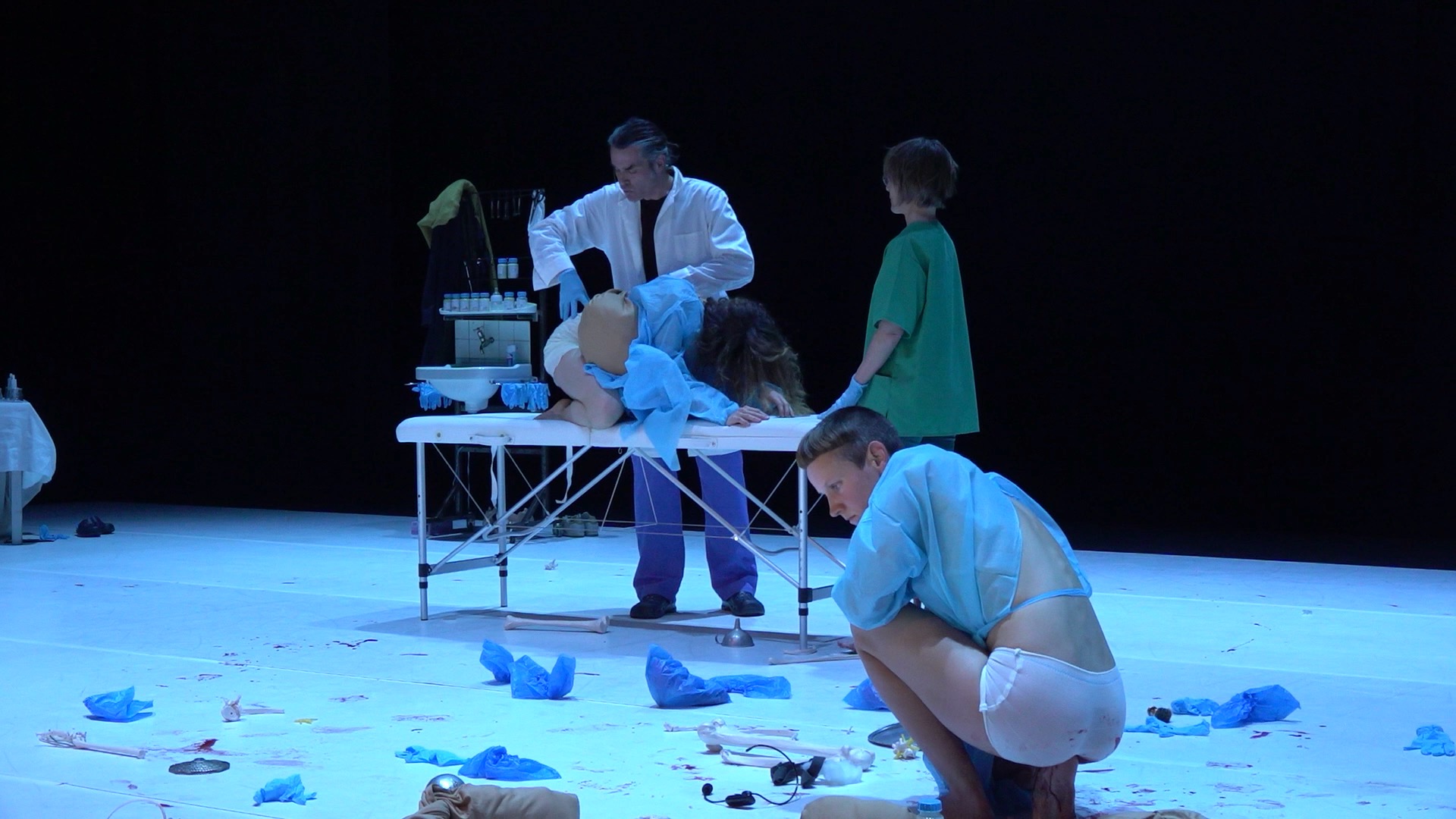
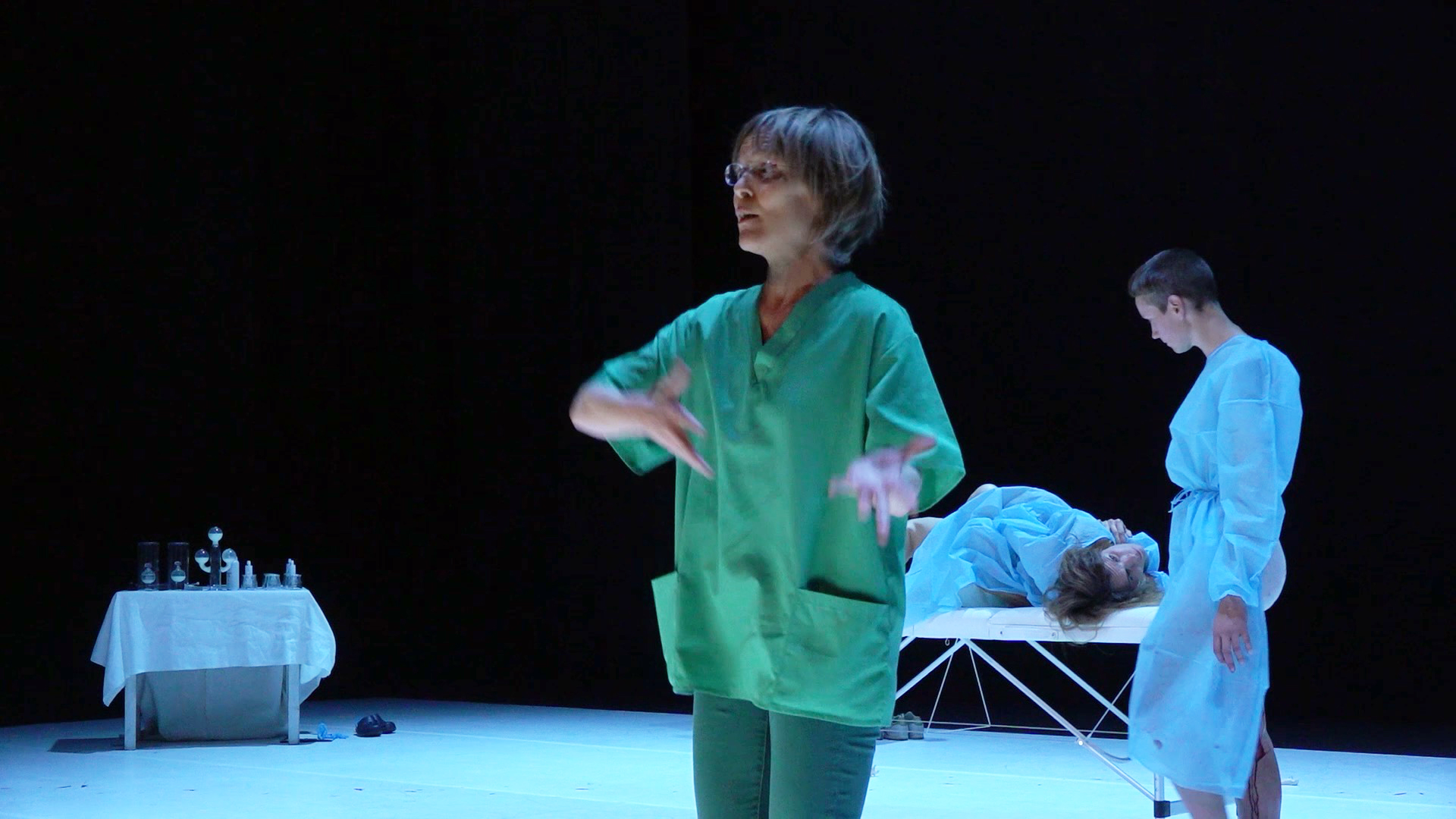
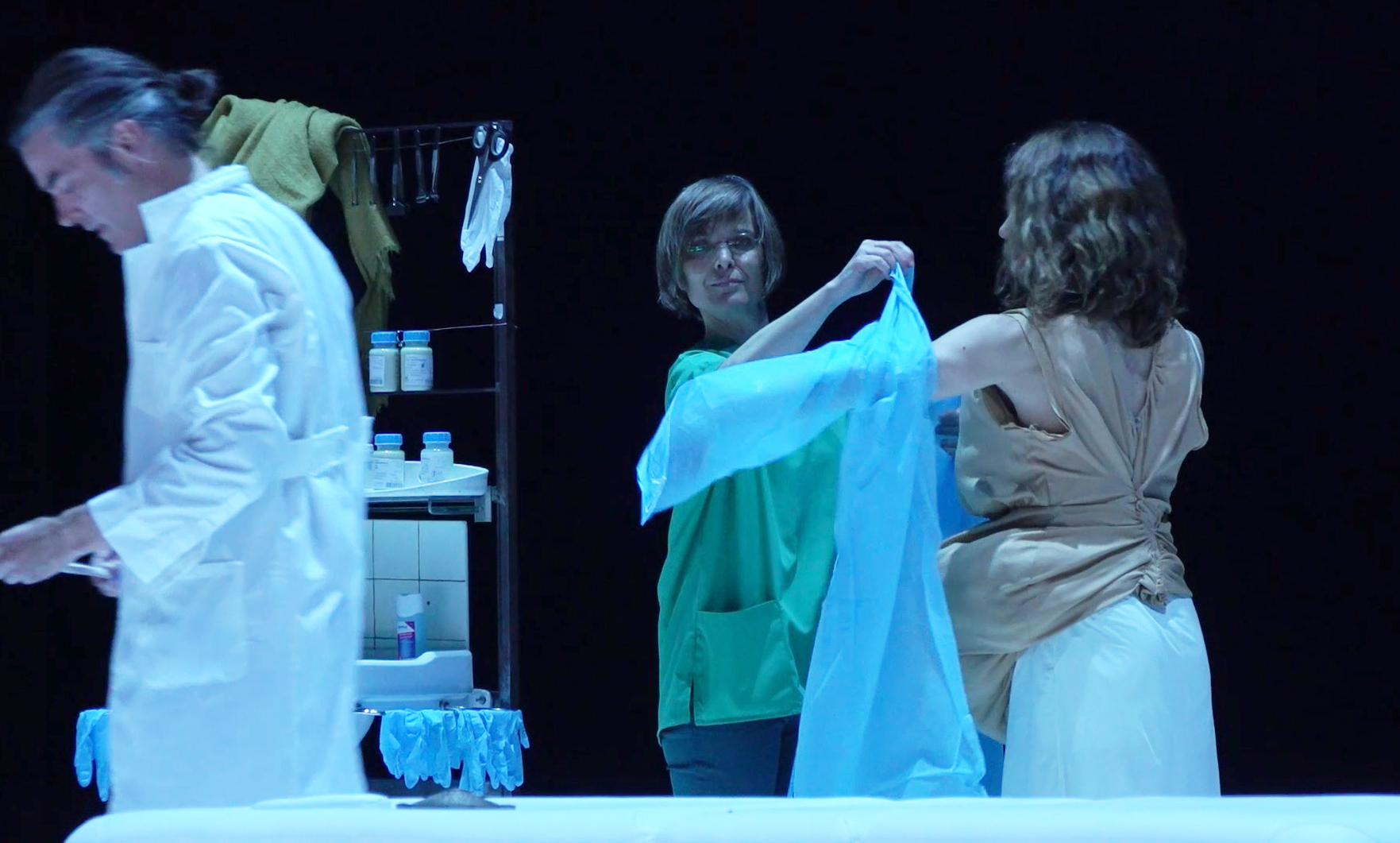
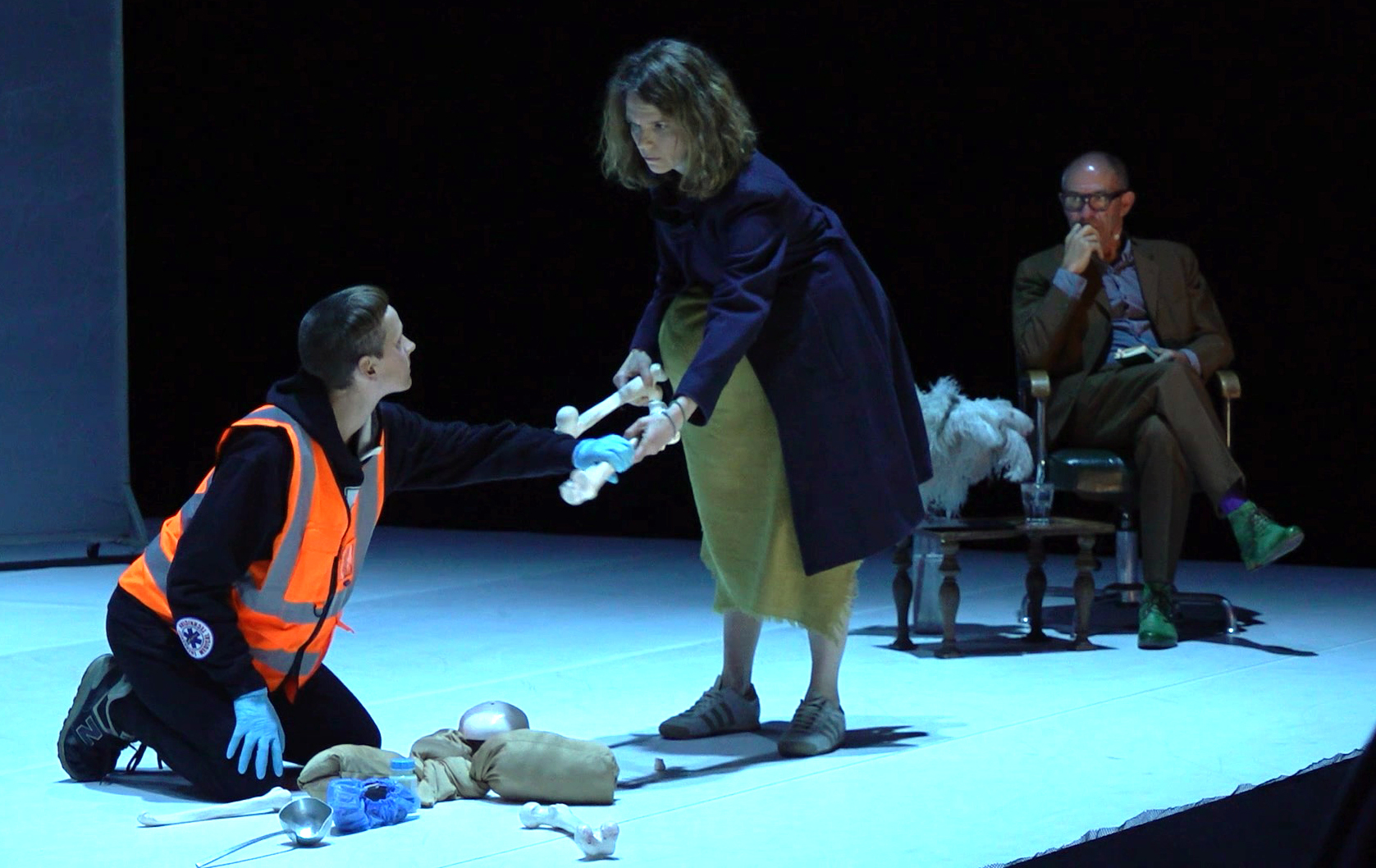
Created at the Théâtre du Loup in the wake of the health crisis, this performance unfolds a series of rituals and clinical protocols. From Swiss fertility to the shadow of Lucy the Australopithecus, the work confronts the hidden history of medicine—such as those two centuries of puerperal fever in Parisian hospitals—with contemporary realities: the identity of milk, the geopolitics of pastures, and testosterone as a vector of social advancement. As the gynecologist delivers his “it’s for your own good”, the scene becomes saturated with an organic red, carried by the silent presence of a woman whose period traces a trajectory of blood through the performance.
Contemporary medical rituals.
With:
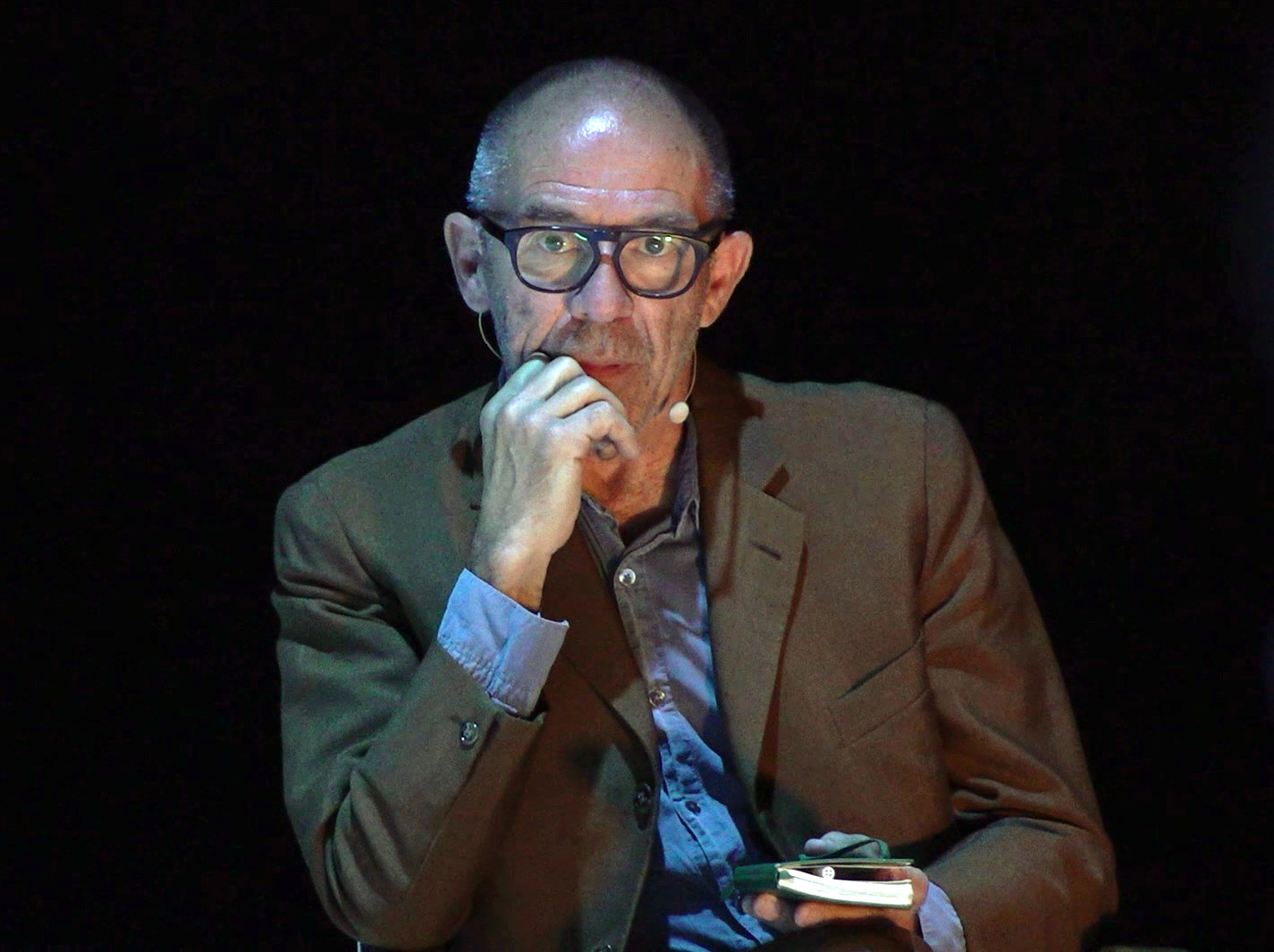
-Vincent Barras, performer, poet, professor of the history of medicine
-Beth Dillon, interdisciplinary visual artist
-Vincent Coppey, actor
-Graziela Ecoffey, performer psychomotor therapist
-Pauline Huguet, dancer, choreographer
and with the discussions and the writings of:
-Francesca Arena, historian, specialist in women’s history of medicine and gender
-Myrto Chronaki, architect, writing on medicalisation, rituals and mothers’ subjectivities


Au carrefour des désordres psychosomatiques et des enjeux biopolitiques, entre le “syndrome de la mère” et celui du médecin, émerge la figure de la Femmelade (femme + malade). Corps-objet scruté par les neurologues, les psychiatres et les obstétriciens, elle devient le terrain d’une gouvernance à réinventer.
Créée au Théâtre du Loup dans le sillage de la crise sanitaire, cette performance déploie une série de rituels et de protocoles cliniques. De la fertilité helvétique à l’ombre de Lucy l’Australopithèque, l’œuvre confronte l’histoire occulte de la médecine — comme ces deux siècles de fièvre puerpérale dans les hôpitaux parisiens — aux réalités contemporaines : identité du lait, géopolitique des pâturages et testostérone comme vecteur d’ascension sociale. Tandis que le gynécologue assène son “c’est pour ton bien”, la scène se sature d’un rouge organique, portée par la présence silencieuse d’une femme dont les règles tracent une trajectoire de sang à travers la performance.







Funding support from: